Profile
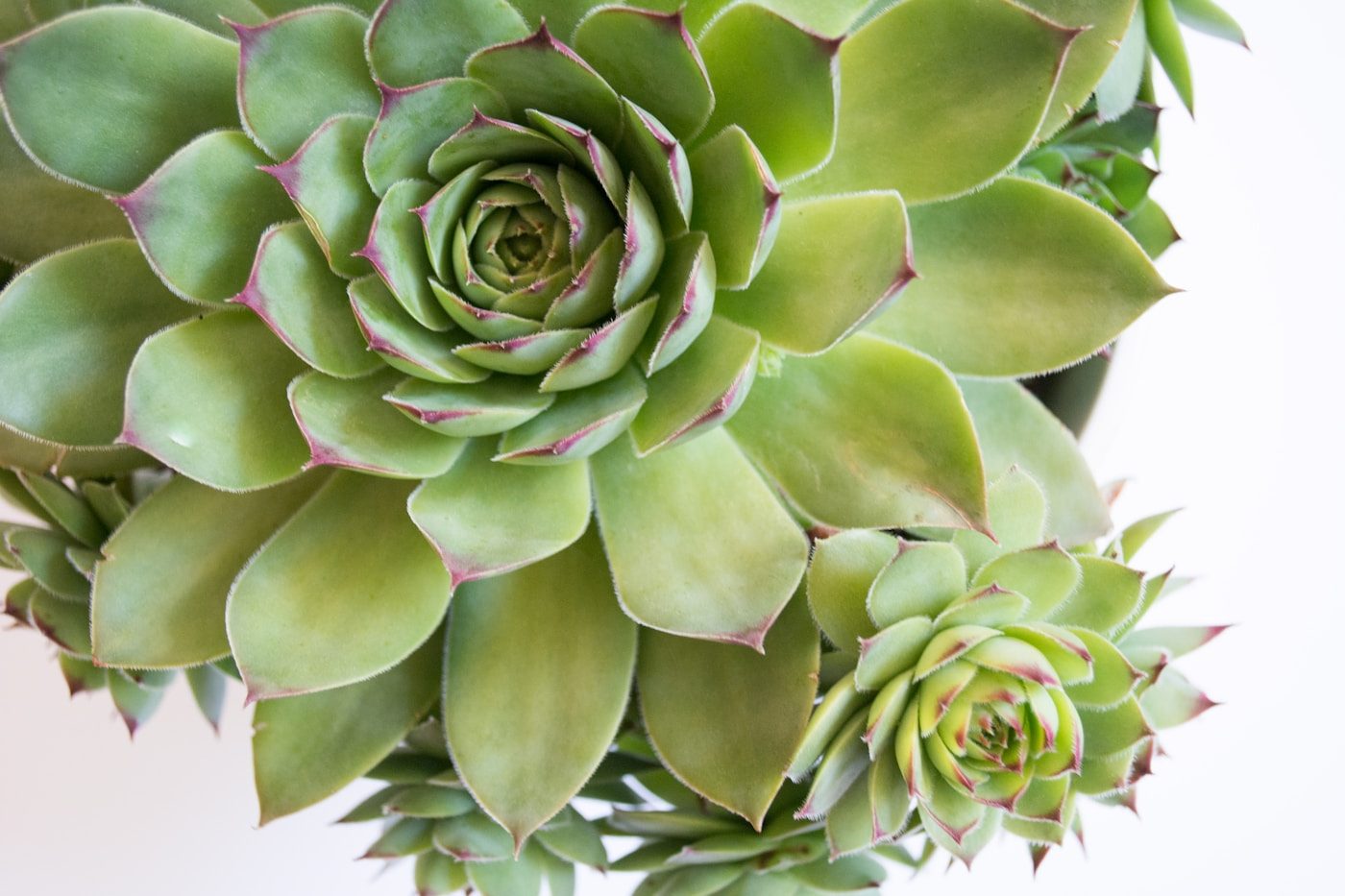
Native to Mexico and Central America, the Echeveria forms a compact rosette of fleshy leaves, often tinted blue, pink or purple depending on the variety and sun exposure.
Light & watering
- Light: full sun or very bright light — essential to keep a compact shape
- Watering: "soak and dry" method, let the soil dry out completely between waterings
- Most common mistake: overwatering, the main cause of rot
Care
- Well-draining cactus/succulent soil is essential
- Repot every 1–2 years
Stress signs & propagation
- Etiolation (stretched stem, leaves spaced out and less colorful): a classic sign of insufficient light, not a disease — moving it to a brighter spot won't always fix a rosette that's already stretched out
- Soft, translucent leaves mean overwatering; wrinkled, shriveled leaves mean underwatering — two opposite signals that are easy to confuse at a glance
- Very easy to propagate from a detached leaf laid flat on dry soil, which grows roots then a new rosette within weeks, without watering in between
- May bloom in late winter/spring on a thin, tall stalk — a sign of a healthy plant, not a warning sign